
Skip to content
Hostripples

Enterprise-GradeCloud VPS in 8 locations

Production-ready cloud compute with guaranteed CPU, RAM and bandwidth on NVMe KVM infrastructure. Built for teams running business-critical workloads who want cloud reliability without the complexity, same specs, same price everywhere: Germany, France, Poland, UK, Canada, Australia or Singapore.

STARTING AT
₹2,448.00/mo
✓NVMe SSD · 24/7 priority support

Cloud VPS Plans

Enterprise-grade compute for production workloads, pick the datacenter closest to your visitors.

LocationServer location

Cloud VPS S

Production workloads for lean teams

₹2,880/mo

₹2,880.00 billed today for 1 month

Renews at ₹2,880.00 every month

Order Now
  • 2 vCPU cores (KVM)
  • 4 GB RAM
  • 40 GB NVMe storage
  • 500 Mbps · unlimited traffic
  • Full root access
  • Free snapshots & DDoS protection
  • 24×7 priority support

Cloud VPS M

Growing SaaS products and online stores

₹5,040/mo

₹5,040.00 billed today for 1 month

Renews at ₹5,040.00 every month

Order Now
  • 4 vCPU cores (KVM)
  • 8 GB RAM
  • 75 GB NVMe storage
  • 1 Gbps · unlimited traffic
  • Full root access
  • Free snapshots & DDoS protection
  • 24×7 priority support

Cloud VPS L

Business-critical sites, APIs and databases

Our pick
₹9,540/mo

₹9,540.00 billed today for 1 month

Renews at ₹9,540.00 every month

Order Now
  • 6 vCPU cores (KVM)
  • 12 GB RAM
  • 100 GB NVMe storage
  • 2 Gbps · unlimited traffic
  • Full root access
  • Free snapshots & DDoS protection
  • 24×7 priority support

Cloud VPS XL

Enterprise workloads at scale

₹14,040/mo

₹14,040.00 billed today for 1 month

Renews at ₹14,040.00 every month

Order Now
  • 8 vCPU cores (KVM)
  • 24 GB RAM
  • 200 GB NVMe storage
  • 3 Gbps · unlimited traffic
  • Full root access
  • Free snapshots & DDoS protection
  • 24×7 priority support
24×7 priority support

Every plan includes full root access, free snapshots and DDoS protection on KVM with NVMe storage, backed by priority 24×7 support. Prices exclude GST; the same plans and prices apply in all 8 locations.

Cloud VPS locations

Every location has its own page with the plans and prices for that datacentre: Australia, Canada, France, Germany, India, Poland, Singapore and United Kingdom. Pick the one closest to your users: the plan line-up is the same everywhere, and each page shows that location’s prices.

Why Hostripples Cloud VPS

Enterprise power, cloud flexibility, honest pricing

Cloud VPS runs on the exact same NVMe KVM infrastructure as our standard NVMe VPS line, we do not put business-critical workloads on different hardware to justify a higher price. What changes is how it is supported: priority queue placement, production-focused positioning, and plans sized for teams where a slow response to an incident has a real cost. If your team already runs production traffic and downtime shows up as a support ticket, a churn risk, or a call from a customer, that is the gap this plan is built to close.

Guaranteed, Isolated Resources

Dedicated CPU and RAM that are never shared or oversold, the same KVM guarantee that makes this infrastructure reliable for production traffic. Your capacity does not shrink because another tenant on the host is having a busy day, which is exactly the kind of variance a production workload cannot absorb quietly.


All-NVMe Storage

NVMe SSD throughout, so database writes, queue processing and read-heavy workloads stay fast under sustained production load, not just in a quick benchmark you ran once during evaluation. That consistency under real, ongoing load is what actually matters once customers are relying on the service.

Full Root Access

Install and configure your production stack exactly the way your team already runs it in staging, no restrictions and no control panel forced on you by the host. Keeping staging and production environments identical removes an entire class of deploy-day surprises.

Priority Scalability

When you need to add CPU, RAM or storage ahead of a launch or a traffic event, Cloud VPS requests get priority handling so you are not waiting behind general queue traffic while a deadline approaches.

Free SSL & Weekly Backups

Automatic SSL renewal and weekly backups are included as useful safety nets, though for genuinely business-critical data we would still recommend layering your own backup and disaster-recovery process on top rather than relying on any single vendor's defaults.

India + Global Locations

Deploy in India or one of seven other regions with identical specs and pricing, so you can put production infrastructure physically close to the customers who depend on it, and keep latency predictable as your user base spreads across markets.

Who is Cloud VPS for?

Enterprise-grade NVMe KVM power for teams running production infrastructure.

These are the teams we see get the most value from the priority support and production positioning, not because the underlying servers are different from NVMe VPS, but because the stakes are higher when something breaks. If any of the following sounds like where your project is today, Cloud VPS is worth a closer look over the standard line.

Growing SaaS companies

Dedicated CPU, RAM and NVMe for products your customers depend on. When your application goes down, it is not just inconvenient, it is a support ticket, a churn risk and a conversation with your own customers, priority support exists for exactly that moment. It is the tier most SaaS teams move to once they have paying customers, not before.

Agencies managing client infrastructure

Guaranteed resources across every client project, no noisy neighbours. If you manage infrastructure for clients who expect uptime from you, Cloud VPS gives you a support relationship you can point to when a client asks what happens if something breaks after hours. It turns your own uptime promise into something backed by an actual support tier, not just good intentions.

Enterprise IT teams

Deploy production workloads with the reliability enterprise buyers expect. Procurement and security reviewers often want to see a support tier built around production before they sign off on a workload, Cloud VPS is positioned and supported that way from day one, rather than requiring a separate negotiation to get there.

Scaling startups

Move from shared hosting to dedicated cloud compute as you grow. Once your product is live and paying customers rely on it, the calculus shifts from the cheapest option that works to infrastructure with real support behind it, that is the point Cloud VPS is built for, usually right around the time a founder starts losing sleep over uptime.

Why choose Hostripples Cloud VPS

The same excellent NVMe KVM hardware, backed by support built for production.

Same proven NVMe KVM hardware

Cloud VPS is not a separate, unproven infrastructure tier, it is the identical NVMe KVM platform our NVMe VPS customers already run production workloads on, so you are not the first team testing it. We built this tier on top of infrastructure with a track record, rather than launching a new platform alongside a new price.

A page-load speed comparison between storage types

Built for business continuity

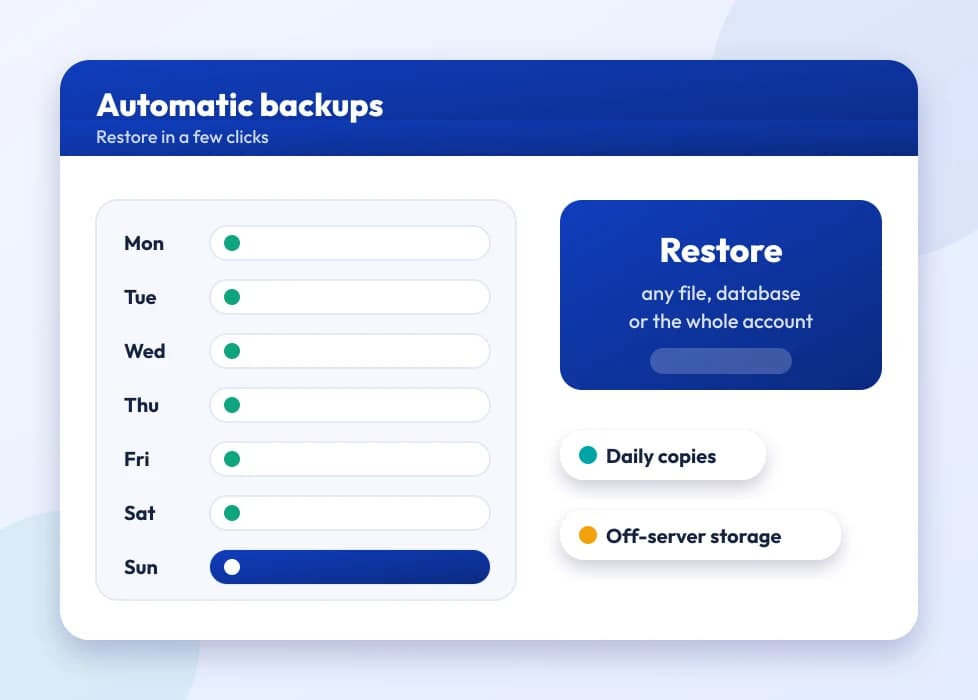
Free snapshots and DDoS protection are standard on every plan. Because Cloud VPS is positioned around production use, we would encourage pairing it with your own backup and monitoring practices rather than treating the included tools as your entire continuity plan, they are a safety net, not a full disaster-recovery strategy on their own.

A week of automatic backups with one-click restore

Priority support queue

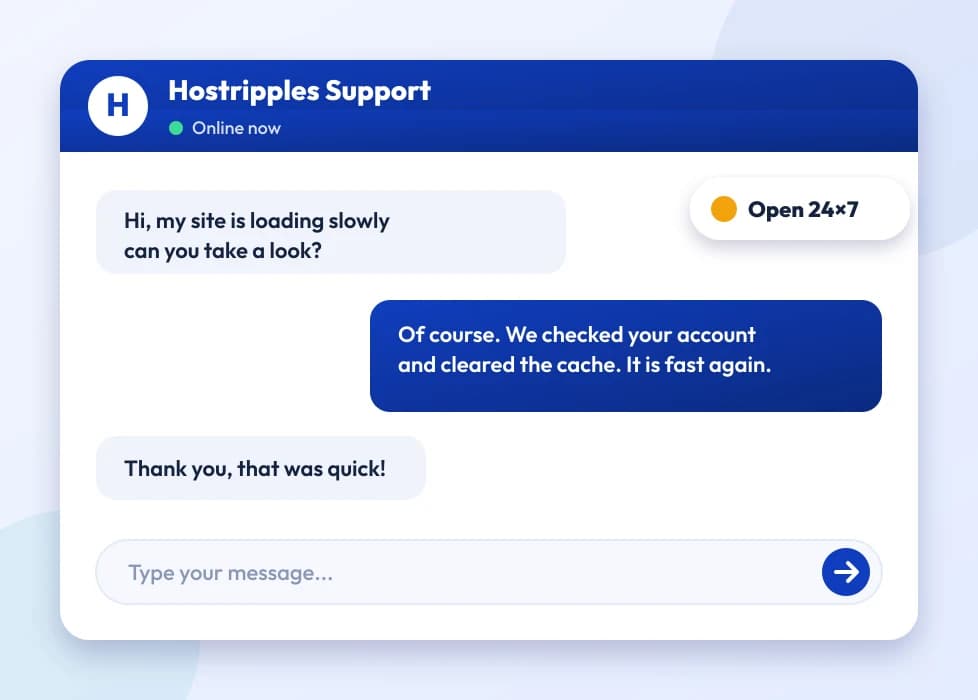
Cloud VPS tickets get routed ahead of general queue traffic, so when something needs attention during a production incident, you are not waiting behind requests from a test server. We do not publish a fixed response-time SLA, but priority handling is built into how the plan is supported, and we would rather tell you that plainly than promise a number we cannot guarantee.

A support chat with an expert answering a question

Predictable pricing for critical infrastructure

Cloud VPS costs more than NVMe VPS by design, roughly the premium you would expect for a stronger support relationship, not because you are getting different hardware underneath. We would rather be upfront about that than invent a technical difference that is not there, if the hardware were actually different, the FAQ below would say so.

A pricing comparison illustration

Which plan is right for me?

Pick the line that fits what you need. These are the same plans and live prices as the cards above.

  • Production workloads for lean teams

    Cloud VPS S

    2 vCPU cores (KVM) · 4 GB RAM · 40 GB NVMe storage

    ₹2,880/mo

    ₹2,880.00 billed today for 1 month

    Choose Cloud VPS S
  • Growing SaaS products and online stores

    Cloud VPS M

    4 vCPU cores (KVM) · 8 GB RAM · 75 GB NVMe storage

    ₹5,040/mo

    ₹5,040.00 billed today for 1 month

    Choose Cloud VPS M
  • Business-critical sites, APIs and databases

    Cloud VPS L

    6 vCPU cores (KVM) · 12 GB RAM · 100 GB NVMe storage

    ₹9,540/mo

    ₹9,540.00 billed today for 1 month

    Choose Cloud VPS L
  • Enterprise workloads at scale

    Cloud VPS XL

    8 vCPU cores (KVM) · 24 GB RAM · 200 GB NVMe storage

    ₹14,040/mo

    ₹14,040.00 billed today for 1 month

    Choose Cloud VPS XL

Prices for India. Other billing terms and server locations are on the plan cards.

Got Questions?

Cloud VPS FAQs

Everything about our enterprise KVM VPS

Cloud VPS runs on the same NVMe KVM infrastructure as our standard NVMe VPS: full root access, dedicated CPU and RAM, no overselling. The difference is not the hardware, it is that Cloud VPS is packaged and supported for teams running production and business-critical workloads, with priority support and pricing that reflects an enterprise service tier rather than a self-serve developer sandbox. If you compare the two plan tables side by side, the specs at each size are identical, what you are actually buying more of is how quickly and thoroughly we respond when something needs attention. We would rather you know that upfront than discover it later and feel oversold, honesty about that matters more to us than a marketing story about faster hardware.
Yes. Cloud VPS gives you full root access so your team can install and configure production infrastructure exactly the way you already run it in staging, no restrictions imposed by us, and no control panel you are forced to use. That consistency between staging and production matters more here than on a personal project, since it removes a whole category of deployment surprises before they reach customers.
Ubuntu, Debian, CentOS, AlmaLinux and Rocky Linux are all supported, and because you have full root access on KVM, you can standardise on whatever distribution your team already runs in staging or on-prem, keeping your production environment consistent end to end. Reinstalling to a different distribution later is possible too, if your stack's requirements change as the product matures and your infrastructure needs evolve with it.
Self-managed by default. For teams without a dedicated ops or SRE function, the Fully Managed add-on hands setup, hardening, monitoring, updates and backups to our engineers, useful when you want production-grade infrastructure without building an internal team just to keep it running. It is common for smaller SaaS teams to start self-managed and add Fully Managed once uptime becomes a board-level concern rather than an engineering nice-to-have.
Cloud VPS support tickets are routed ahead of general queue traffic rather than first-come-first-served with every other request. We do not publish a fixed response-time SLA today, if a contractual SLA is a hard requirement for your compliance or procurement process, talk to our team before you order so we can be upfront about what we can and cannot commit to in writing before you sign anything.
Yes, and scaling requests on Cloud VPS get priority handling. You can move up in CPU, RAM and NVMe storage as usage grows, which matters more here than on a hobby project, since you are usually scaling ahead of a launch or a traffic event rather than reacting after capacity has already become a visible problem to your users. Planning that upgrade a little ahead of the event, rather than during it, is where the priority queue helps most.
India plus seven additional regions, Germany, France, Poland, UK, Canada, Australia and Singapore, at identical specs and pricing, so production traffic can be served from whichever region is closest to the customers who actually use your product, without a cost trade-off for choosing based on latency rather than price alone. Teams serving multiple markets sometimes run one Cloud VPS per region rather than routing everyone through a single location.
Yes, free weekly backups and on-demand snapshots come with every plan. For business-critical systems we would still recommend treating these as one layer of a broader continuity plan rather than your only line of defence, particularly if your compliance requirements call for offsite storage or point-in-time recovery beyond a weekly cadence, talk to us if that applies to you.
You are paying for the support relationship and production positioning, not different silicon. Cloud VPS is priced roughly 1.8x the equivalent NVMe VPS tier, which reflects priority ticket handling, priority scaling requests and being supported as a business-critical service rather than a self-serve VPS, closer to what you would expect to pay for an account manager relationship than for extra hardware you cannot see. If that trade-off does not matter for your workload, you are not obligated to pay for it.
Probably not the best value. If downtime would not cost you real money or customer trust, our standard NVMe VPS line gets you the identical NVMe KVM hardware at a lower price. Cloud VPS earns its premium once something you run actually needs to stay up and a slow support response would be a real business problem rather than a minor annoyance you can shrug off.
We do not publish a fixed contractual uptime SLA at this time. What Cloud VPS does guarantee is dedicated, isolated NVMe KVM resources and priority support handling. If a formal SLA is required for a vendor review or compliance process, reach out to our team to discuss your specific requirement before signing a contract that assumes one exists on our end.
Yes, full root access lets you host as many client sites or applications as your plan's CPU, RAM and storage allow. Many agencies use one Cloud VPS per client, or per tier of client, specifically so one account's traffic never becomes another client's incident, and so a support escalation on one project does not get lost behind noise from an unrelated one entirely, which keeps client-facing reporting cleaner too.
KVM virtualisation isolates your VPS from other tenants, and free snapshots mean you can restore to a known-good state quickly if something goes wrong. Because Cloud VPS is supported at priority level, any hardware-related incident affecting your VM is handled ahead of general queue tickets, which is exactly the scenario the priority tier exists for in the first place, and exactly the kind of event where minutes matter for a production service.
Not necessarily. Plenty of customers run it self-managed with a developer who is comfortable on the command line. If you do not have that in-house, the Fully Managed option covers setup, hardening, monitoring, updates and backups so you are not building an ops function just to keep a production server healthy while the rest of the team focuses on shipping the product. It is a reasonable middle ground before headcount for a full platform team is justified.
Yes. Cloud VPS runs on KVM, a real virtualisation layer with its own kernel, not a shared container host, so Docker, Podman and most orchestration tooling run the same way they would on any dedicated Linux box, without the nested-virtualisation restrictions you would run into on some cheaper VPS platforms built on OpenVZ.
No, the port speed allocations (500 Mbps up to 3 Gbps depending on plan size) are identical between the equivalent Cloud VPS and NVMe VPS tiers. The difference between the two product lines is support and positioning, not network capacity, so you are not paying extra here for bandwidth you could get cheaper on the standard plan.
The same plan costs the same whether you deploy in India or any of our seven other regions, so you can choose a location purely on latency to your users or data-residency needs, without a pricing penalty for picking somewhere other than the default India location most customers start with.
Yes, since both run on the same underlying NVMe KVM infrastructure, moving between the two is more of a support-tier and billing change than a technical migration. Contact our team when you are ready and we will walk you through it, this is a common move once a project that started as an experiment becomes something the business actually relies on day to day.
No, prices shown are exclusive of GST, added at checkout per Indian tax requirements. For business customers this typically means a proper GST invoice for your accounting, worth confirming your billing details are correct at signup so invoices come through clean the first time rather than needing correction later during a reconciliation, particularly if you are claiming input credit.
Growing SaaS companies whose product is customer-facing, agencies managing infrastructure on behalf of clients, enterprise IT teams that need a support tier procurement will accept, and scaling startups past the point where the cheapest working option is good enough. If none of that describes your use case, NVMe VPS on the identical hardware is likely the better value for you right now, and you can always move up later.
Our support team can advise on migrating files, databases and DNS with minimal downtime, and Cloud VPS requests get priority handling in that process. If you would rather not run the migration yourself at all, the Fully Managed add-on can take care of it end to end, which is often worth it for a production cut-over you only want to do once and get right, rather than risk a rushed weekend migration.
Yes, every Cloud VPS comes with its own dedicated IPv4 address by default, which matters for teams that need a stable address for firewall allowlisting, outbound email reputation, or integration with other systems that expect a fixed, predictable origin address rather than one that could change without notice.
Every plan includes unlimited traffic at your tier's port speed, so ordinary growth in usage is not billed as overage. If your traffic pattern looks unusual for a production service, our priority support queue means that gets looked at sooner rather than sitting in a general review backlog behind lower-priority requests from self-serve accounts.
Like our other server products, Cloud VPS is not covered by the 30-day money-back guarantee that applies to shared and reseller hosting, since resources are provisioned for you immediately on order. See our Refund Policy for full terms, and if you are unsure it is the right fit, our team can help you size the right plan, or point you to NVMe VPS instead, before you commit to anything you are not confident in yet.
For us it describes the service wrapped around the hardware, priority support, production-focused positioning and pricing that reflects a business-critical use case, not a claim about faster components underneath. We would rather define the term honestly here than let it imply a technical upgrade that does not actually exist between the two product lines, our FAQ above says the same thing plainly.

Need to talk through an SLA or compliance requirement?

Speak to our team before you order if Cloud VPS needs to fit a specific procurement or vendor-review process, we would rather clarify that upfront than after signature.

Talk to Sales

Ready to power up with Cloud VPS?

Deploy enterprise-grade NVMe KVM compute with full root access, scale anytime, backed by 24/7 priority support built for production workloads.

View VPS Plans