
Skip to content
Hostripples

HOSTRIPPLES DOMAINS

Domains Overview

Register, transfer or bulk-search domain names with Hostripples. 500+ extensions including .com and .in, with prices shown upfront.

Explore solutions
4Solutions
DomainsCategory
One place

FIND YOUR FIT

All Domains Solutions

4 solutions to explore

Starting prices depend on the plan, billing term and availability. See each service page for full pricing and applicable taxes.
Choosing and Registering a Domain Name in India

A domain name is the one piece of a website nobody can copy from you — your hosting can change, your design can change, but the address stays the same as long as you keep renewing it. For most people, the actual work of domain registration India takes minutes: search a name, check it's free, pay for a year, and it's live. The part worth slowing down for is picking the right name and the right extension, because that decision is much harder to undo later than any hosting or plan choice.

The most common question we hear is .in vs .com domain — and there isn't one correct answer, only trade-offs. A .com still reads as the global default to a lot of visitors and works well if you expect customers outside India or want the broadest possible recognition. A .in signals “this business is in India” at a glance, tends to be easier to find available for a good short name, and increasingly renews cheaper too. Plenty of serious Indian businesses run entirely on a .in domain and never think twice about it; plenty of others buy both and point the .in to the .com so nobody lands on a dead page by mistake. If you're registering a first domain and aren't sure, .in is a perfectly safe, professional default for an India-focused business — and if the .com version of your name is available and affordable, there's rarely a reason not to hold it too, if only so a competitor can't.

Searching for cheap domain names India, you'll see first-year prices advertised everywhere, some of them very low. That number is real, but it's only ever the first year — every domain renews at a separate, usually higher, price after that, and that renewal rate is what you're actually committing to for as long as you keep the name. When you buy domain name India through Hostripples, the price shown upfront is the price you pay, with no surprise add-ons for basics a lot of registrars still charge extra for — WHOIS privacy protection to keep your personal contact details off the public WHOIS record, and DNS management to point the domain wherever you host it.

This page covers the four ways people actually use our domain tools: registering a brand-new name, transferring one in from another registrar without downtime, checking many name ideas at once with bulk search, and — if you're setting up hosting at the same time — the domain-plus-hosting offer that bundles a domain with a yearly NVMe hosting plan. Whichever one applies to you, the rest of this page goes into who needs what and answers the questions that come up most before someone commits.

Who is registering or moving a domain right now?

Four situations, four different tools on this page.

Not everyone buying a domain is starting from zero — some are naming a business for the first time, others are cleaning up a mess left by an old registrar. The tools above cover all of it; here's who typically reaches for which one.

First-time business owners

Registering your very first domain for a shop, a service business or a personal brand — this is where domain registration India usually starts, and getting the name and extension right up front saves a rename later.

Agencies and freelance web developers

Registering names on behalf of clients, often several at once — Bulk Domain Search exists specifically so you're not checking availability one tab at a time.

New online stores

A short, brandable domain matters more for a store than almost anywhere else, and pairing it with hosting from day one through the Domain Offer avoids managing two separate renewals and two separate support relationships.

Anyone unhappy with their current registrar

Stuck with a registrar that's slow, expensive at renewal, or just hard to reach — Transfer Domain moves the name to Hostripples using the standard EPP/auth code process, with no site downtime.

How domain registration works with Hostripples

From search to live DNS, without hidden steps.

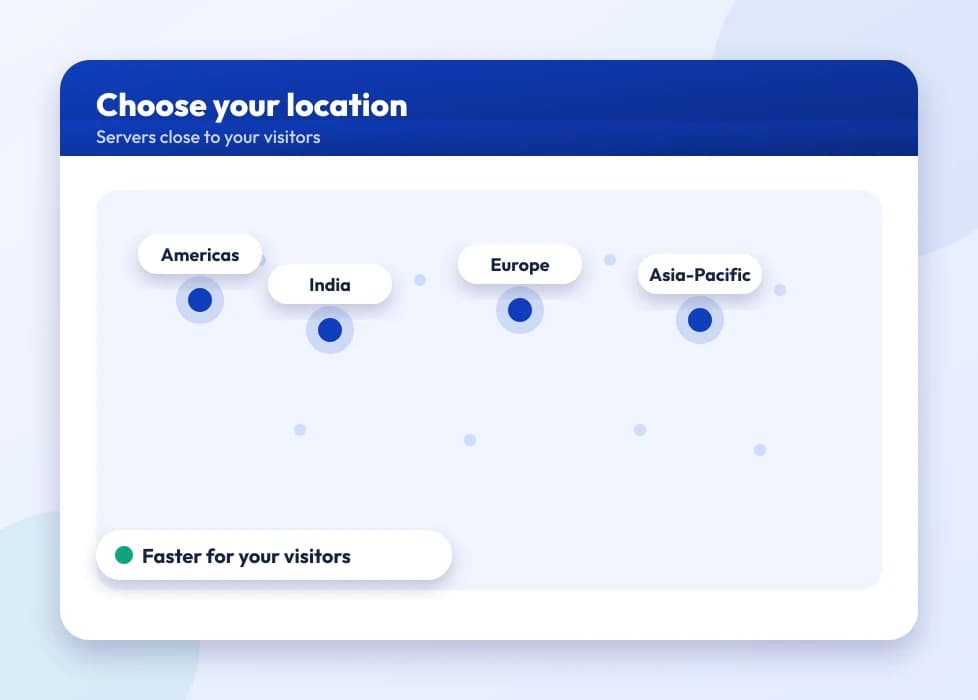
Search across 500+ extensions

One search checks .com, .in, .co.in and hundreds of other extensions at once, with live availability and pricing shown upfront — no surprise charges once you reach checkout.

A search bar checking domain availability across extensions

Manage everything from one dashboard

DNS records, nameservers, auto-renew and WHOIS privacy are all handled from your Hostripples account — no separate registrar login to remember.
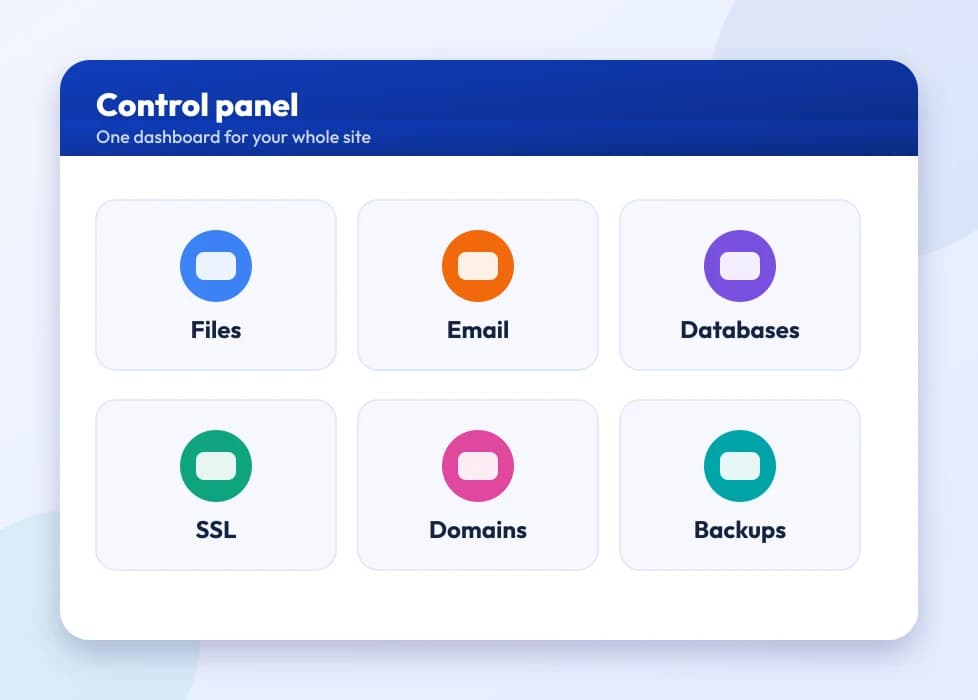
A control panel dashboard with tiles for DNS and domain management

WHOIS privacy included

Your personal contact details are kept off the public WHOIS record by default, rather than sold back to you as a paid add-on the way some registrars do it.
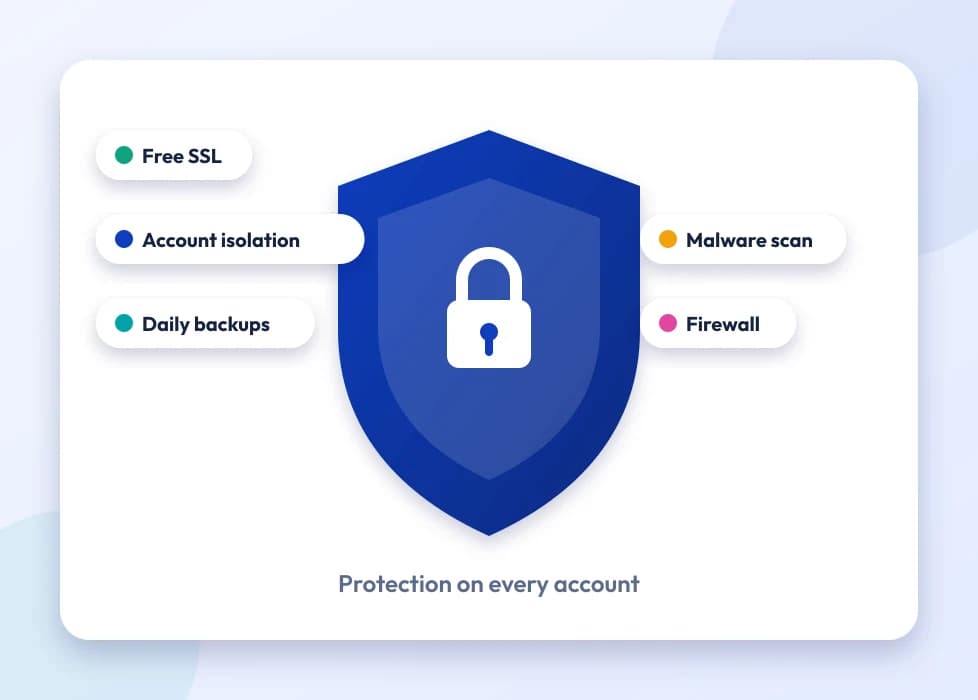
A shield representing WHOIS privacy protection

Help when a transfer or setup goes sideways

24×7 support in English, Hindi and Marathi for EPP code issues, DNS propagation questions, or just deciding between extensions before you commit.
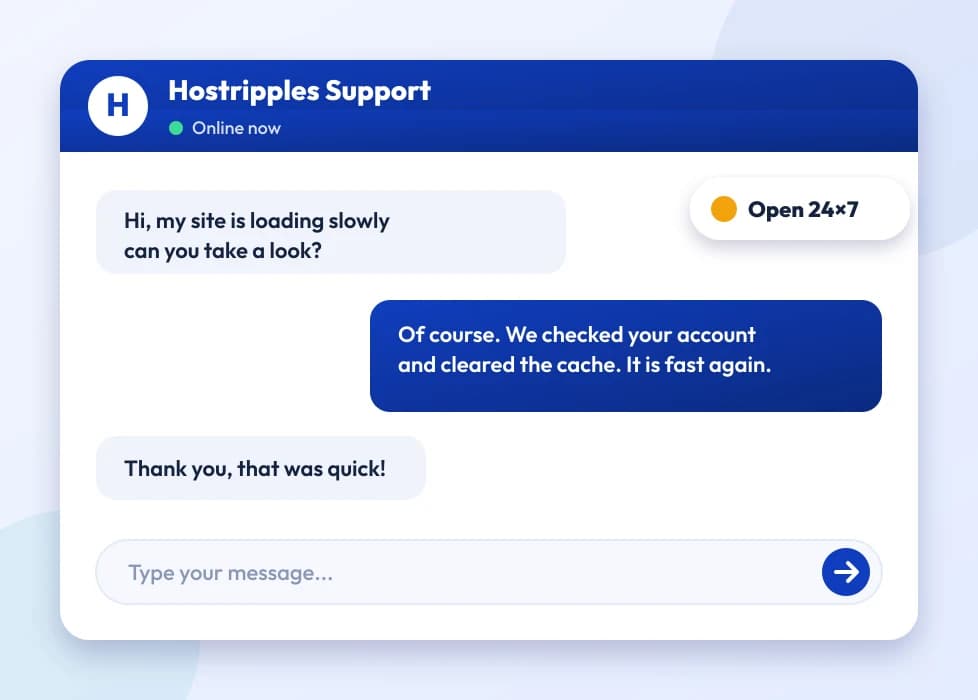
A support chat with an expert answering a question
None of this requires any technical background — search, register or transfer, and the domain is under your control within minutes. The choices below only matter once you're comparing extensions or weighing a transfer against starting fresh.
Got Questions?

Domain Registration FAQs

The basics, before you commit to a name

A domain is just the name — like buying an address. Hosting is the server space where your website's actual files live. You need both to have a working site, but they're separate services and don't have to come from the same provider, though buying them together (like our Domain Offer) means one bill and one support line instead of two.
Registration itself is near-instant once payment goes through — the name is yours within minutes. What takes longer is DNS propagation if you're pointing the domain at a new host, which can take anywhere from a few minutes to about 24-48 hours depending on your previous registrar's settings.
Either works. A longer registration (3-5 years) locks in today's price and means one less thing to remember to renew, which matters if a missed renewal email could mean losing the domain to someone else. A single year costs less upfront and suits someone still testing whether a business name will stick.
WHOIS is the public record of who owns a domain — without privacy protection, your name, phone number, email and even address are visible to anyone who looks it up, and that data gets scraped constantly by spammers and telemarketers. WHOIS privacy replaces your details with the registrar's in the public record, and it's included by default on our domains rather than sold as an add-on.
Both are solid. .in tells an Indian visitor immediately that they're dealing with a local business, which builds a specific kind of trust .com doesn't automatically carry, and short .in names are often easier to find available. .com remains the more globally recognized default. If your business is India-focused, .in is a fully professional choice on its own.
Yes, and it's a common move — register both, use one as your primary site and set the other to redirect to it. That way a customer who guesses the “wrong” extension still lands on your site instead of a placeholder page or, worse, a domain squatter.
Most registries give a short grace period after expiry where you can still renew at the normal price, followed by a redemption period where renewal costs significantly more, and after that the name becomes available for anyone to register. We send renewal reminders well before expiry specifically so this doesn't happen by accident — but the safest habit is turning on auto-renew.
No downtime is required. A transfer moves ownership of the domain from your old registrar to Hostripples using an authorization code (EPP code) from the old registrar; your DNS records and website keep working throughout, since the transfer changes who manages the domain, not where it currently points.
It's a unique authorization code — also called an auth code or transfer code — that proves you're allowed to move a domain between registrars. Your current registrar generates it, usually from their control panel or by request to their support, and it's required to start a transfer to us.
Most registries won't allow a transfer within 60 days of expiry, and won't allow one for 60 days after a domain was first registered either — these are ICANN-level rules, not something specific to any registrar. If your domain is close to expiring, renewing it first with your current registrar and transferring afterward is usually the smoother path.
If you're naming a new business, checking ten or twenty name ideas one search at a time is slow and easy to lose track of. Bulk Domain Search checks a whole list in one go and shows you availability across all of them together, which is exactly the workflow agencies and anyone brainstorming names actually needs.
It pairs a .com or .in domain registration with a yearly NVMe hosting plan at a combined price lower than buying both separately, so you get a live website and a working domain from a single checkout instead of juggling two purchases and two renewal dates.
No — Register a Domain and Domain Offer are separate options specifically for that reason. You can register a domain on its own and point it anywhere you like, or host it elsewhere entirely; the domain isn't locked to using our hosting.
Over 500 TLD extensions, covering the common ones (.com, .in, .net, .org, .co.in) as well as newer and niche extensions for specific industries and use cases — search availability is shown live as you type.
Yes — .in is a country-code domain open to anyone, while .co.in is a second-level extension originally positioned for companies. In practice .in has become the more commonly registered option; .co.in remains available and is sometimes chosen when a preferred .in name is already taken.
No — .in domains are open for registration by individuals and businesses worldwide, with no citizenship or local-presence requirement, which is part of why .in has grown popular even beyond India-based registrants.
Domain locking prevents unauthorized transfers away from your registrar without your explicit action. Domains are typically locked by default as a security measure — if you're initiating a transfer to another registrar, you'll need to unlock it first from your Hostripples account.
Yes, entirely — you can register or transfer a domain to us and manage its DNS records to point at any hosting provider, mail service or CDN you choose. The domain and where it resolves to are independent.
Nameservers tell the internet which DNS records to trust for your domain. You'd change them if you're moving DNS management to a different provider entirely — for most people who just want to point a domain at Hostripples hosting, updating individual DNS records is simpler than switching nameservers.
Yes, every purchase generates a proper GST invoice through our billing system, which matters for business owners who need it for their own accounting and tax filing.
Yes, both are technically allowed in most extensions, though hyphens and long strings of numbers tend to hurt memorability and typability. A clean, short, pronounceable name almost always outperforms a clever hyphenated one for a real business.
Nothing — the domain and the hosting are billed and managed separately (unless bought together under the Domain Offer, in which case check that plan's specific terms). Losing hosting means your site stops being reachable, but you'd still own and control the domain itself until its own renewal lapses.
Not necessarily — first-year promotional pricing is standard industry practice, not a red flag. What matters is checking the renewal price before you commit, since that's the number you'll actually pay every year after the first, and making sure basics like WHOIS privacy and DNS management aren't hidden behind extra charges.
You still have to provide accurate registrant details when registering — that's an ICANN requirement, not optional — but WHOIS privacy protection keeps those details out of the public record, which is the practical anonymity most people actually want.
An Internationalized Domain Name lets you register a domain using non-Latin scripts — including Devanagari and other Indian scripts — rather than being limited to the Latin alphabet. Availability depends on the specific extension; ask support if you have a script-specific name in mind.
Yes — once a domain's DNS is managed with Hostripples, you can add a Business Email plan on the same domain and have addresses like [email protected] live within minutes of the MX records updating. See our Email overview for plans.
Unlock it in your account, request the EPP/auth code, and provide it to your new registrar to start the transfer — the same process in reverse as transferring a domain in. We don't add exit friction beyond the standard security steps every registrar follows.
Yes — a single domain can host unlimited subdomains (like shop.yourdomain.com or blog.yourdomain.com), each pointing to a different site or service if you want, all under the one domain registration.
You'd need a different name or extension — .in versus .com versus .co.in often opens up options even when the exact name is taken on your first choice. If the name is trademarked and being used to impersonate your business, that's a separate dispute process (UDRP for gTLDs, INDRP for .in) rather than something registration alone resolves.
Yes, and turning it on is the single easiest way to avoid accidentally losing a domain to a missed renewal — the alternative is relying entirely on remembering an annual email reminder.
In domains are governed by NIXI (National Internet Exchange of India) under ICANN's broader framework, with .in-specific dispute resolution rules (INDRP); generic extensions like .com, .net and .org follow standard global ICANN rules regardless of where the registrant is located.
Domain registrations are generally non-refundable once processed, since the registry fee is paid immediately on registration — this is standard across the industry, not a Hostripples-specific policy, so it's worth double-checking spelling and extension before completing checkout.
24×7 support in English, Hindi and Marathi, covering everything from a stuck transfer to a DNS record that isn't propagating to questions about which extension makes sense for your business.
With auto-renew turned on and a valid payment method on file, you genuinely can set it and forget it — the domain renews automatically each term and you get a receipt, no manual action needed unless you want to change something.
Premium domains are short, generic or highly memorable names (think single dictionary words or very short strings) that registries or previous owners price well above standard registration fees because of their inherent demand — the elevated price reflects the name's value, not a fee Hostripples adds.
Not really — domain availability isn't reserved by browsing or adding it to a wishlist; someone else can register a name you were considering at any point until you actually complete the purchase, so it's worth registering promptly once you've settled on a name.
The registry (like NIXI for .in, or Verisign for .com) is the organization that actually maintains the master database for an extension. A registrar, like Hostripples, is accredited to sell and manage registrations on the registry's behalf — you interact with the registrar, not the registry, for day-to-day management.
No, they can run on completely independent renewal cycles unless purchased together under a bundle like the Domain Offer — check your account dashboard for each item's individual renewal date so nothing lapses unexpectedly.
Yes — extensions are registered independently, so yourbrand.com and yourbrand.in could, in principle, be owned by two unrelated parties. This is exactly why registering the extensions that matter to your business early is worth doing before a competitor or unrelated party does.
The grace period is a short window right after expiry where you can still renew at the normal price. If that passes, the domain enters a redemption period with a much higher reinstatement fee, and after that it's released for anyone to register. Auto-renew avoids ever needing to think about either.
No — trademark clearance isn't part of the registration process for any registrar; it's the registrant's responsibility to check that a name doesn't infringe on an existing trademark before registering and using it commercially.
Yes, up to 63 characters per label (the part before the extension) under standard domain naming rules — in practice, almost every usable business name is far shorter than that limit.
Yes, DNS management from your account lets you add, edit or remove A, MX, TXT, CNAME and other record types yourself — useful for pointing email elsewhere, verifying a service like Google Search Console, or setting up SPF/DKIM for a mail provider.
Start with Bulk Domain Search and try several name variations and extensions at once — seeing what's actually available across a shortlist, rather than checking ideas one at a time, makes the decision faster and less frustrating.

Still have questions?

Our support team is live 24/7 in English, Hindi & Marathi.

Chat with an Expert
Domains — Register, Transfer & Bulk Search | Hostripples
