
Skip to content
Hostripples

HOSTRIPPLES WEB HOSTING

Web Hosting Overview

Compare Hostripples web hosting: cPanel, Plesk and Windows shared hosting, WordPress and business hosting, with starting prices and 24×7 support.

Explore solutions
6Solutions
Web HostingCategory
One place

FIND YOUR FIT

All Web Hosting Solutions

6 solutions to explore

Starting prices depend on the plan, billing term and availability. See each service page for full pricing and applicable taxes.

Web Hosting in India: How to Actually Pick the Right Plan

"Web hosting" sounds like one thing until you actually go shopping for it, and then you're suddenly comparing cPanel against Plesk, Linux against Windows, and a dozen web hosting India providers all promising the same "unlimited" everything. The honest answer is that there isn't a single best web hosting India has to offer — there's a best plan for what your specific site needs to do, and that decision is usually smaller than it looks on the first click.

Start with the control panel, because it quietly decides most of your day-to-day experience. cPanel hosting India-wide is the default for a reason: it's the panel most tutorials, plugins and freelance developers already know, which matters more once you're the one logging in every week to manage email, renew an SSL certificate or check disk usage. Plesk is the other serious option, and it isn't a downgrade — it's the right panel if you or your developer already run Windows sites, need ASP.NET and MSSQL alongside PHP, or simply prefer its layout. Neither is "better" in the abstract; whichever one your team already knows how to use is usually the correct answer.

Under the panel, the actual hosting stack is what a visitor feels. Every shared plan on this page — cPanel or Plesk, Linux or Windows — runs on NVMe storage with LiteSpeed Enterprise handling web requests, the same combination used on the pricier Business Hosting tier. That's worth knowing, because it means the jump from a basic plan to Business Hosting isn't about getting "real" speed for the first time; it's about buying more CPU, RAM and I/O headroom once your current plan is running close to its limit, without jumping straight to managing a VPS yourself.

If you're comparing this page against three other browser tabs of cheap web hosting India offers, the questions worth asking aren't only about price. Ask what panel the plan actually runs, whether it's NVMe or plain SSD underneath, how many one-click apps the installer supports if you're not building on WordPress, and what your renewal price looks like once the first-term discount ends. Every plan listed on this page answers those honestly the same way — LiteSpeed and NVMe throughout, free SSL and daily backups included as standard, and pricing that doesn't quietly jump the moment your introductory term is over.

Who each web hosting plan is actually built for

Match the plan to the project, not the other way round

Every product on this page runs on the same NVMe-plus-LiteSpeed foundation. What actually changes between them is the control panel, the resource headroom and the tooling layered on top — which, in practice, comes down to who's logging in and what they're building.

First website or small business

Looking for the best web hosting for small business India has without a steep learning curve? cPanel NVMe Shared Hosting is where most people land — a familiar panel, one-click installs, and pricing built for a first site, not a data centre.

Developers and agencies

Client work rarely sticks to one stack. Plesk Linux and Plesk Windows Hosting run PHP, ASP.NET and MSSQL side by side on the same NVMe infrastructure, so the panel adapts to the project instead of the other way round.

Bloggers and WordPress publishers

WordPress Hosting layers WordPress Toolkit, LiteSpeed Cache and one-click staging on top of the same NVMe base — hosting built specifically around one CMS, instead of general-purpose hosting stretched to fit it.

Growing stores and high-traffic brands

Once a shared plan starts feeling tight during a sale or a traffic spike, Business Hosting adds CPU, RAM and I/O headroom plus a free domain — without the server administration a VPS would ask of you.

Which control panel actually fits your site?

Four ways to read the directory above, depending on what you're building

cPanel NVMe Shared Hosting — the safe default

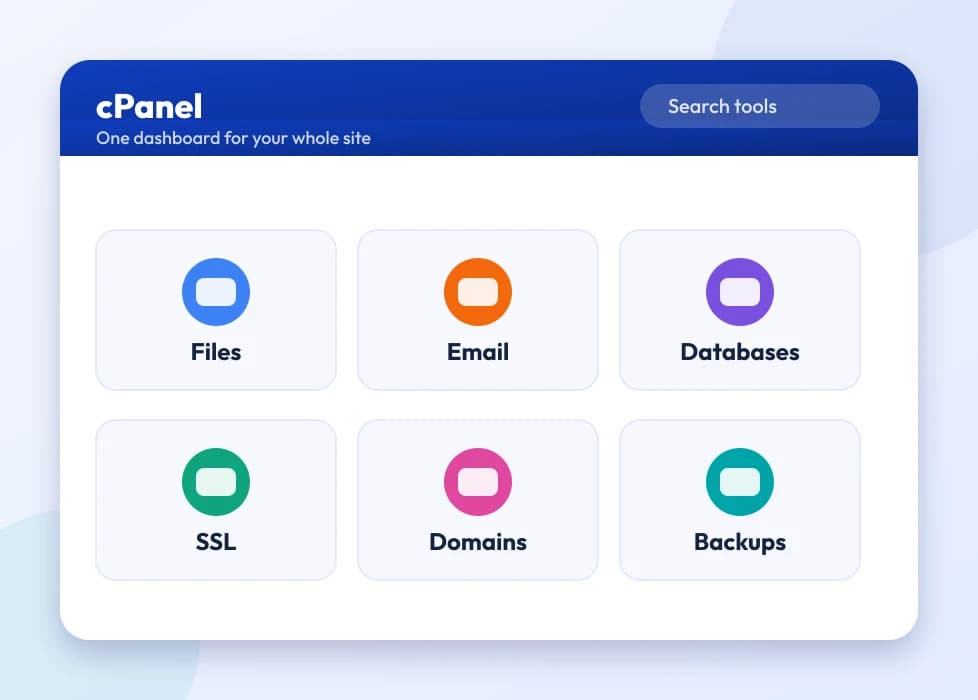
If you're not sure which panel you need, you probably need this one. cPanel is the most widely documented control panel on the internet, which means more tutorials, more compatible plugins, and a developer for hire who already knows it, whenever you need one.

NVMe SSD storage speed indicator

Plesk Linux Hosting — when Plesk is already your panel

Agencies migrating a batch of existing sites, or anyone who already manages servers through Plesk elsewhere, gets the same interface here — full Plesk Obsidian, WordPress Toolkit included, on the same NVMe storage as every other plan on this page.
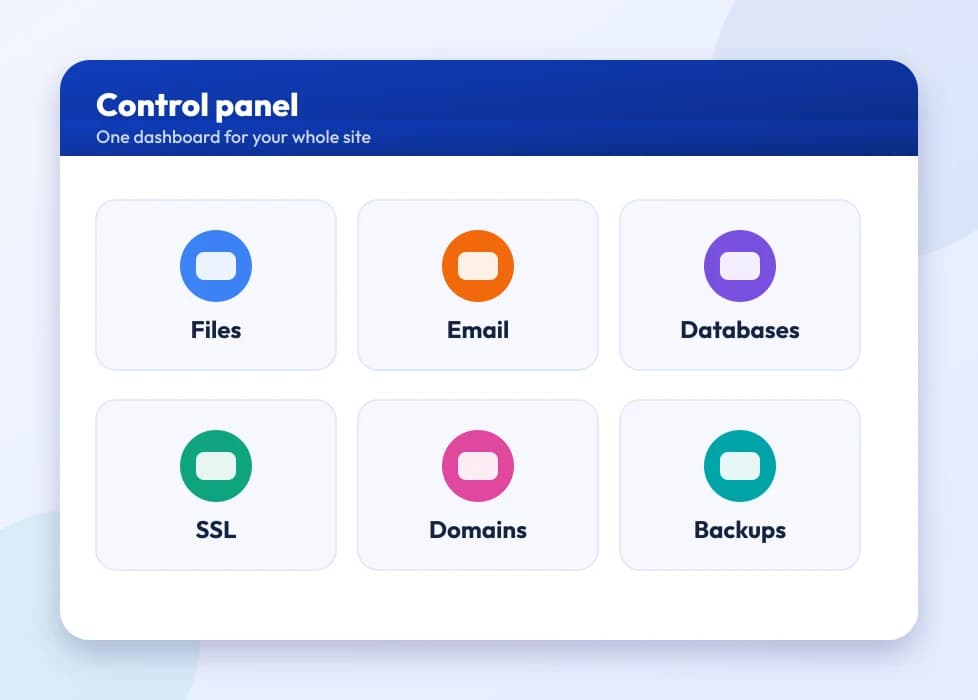
Plesk control panel dashboard with tiles for hosting tools

Plesk Windows Hosting — for ASP.NET and MSSQL sites

Not every site is PHP. If yours runs on ASP.NET, needs an MSSQL database, or was built by a .NET developer, Windows Hosting through Plesk is the only plan on this page that supports it properly, without workarounds.
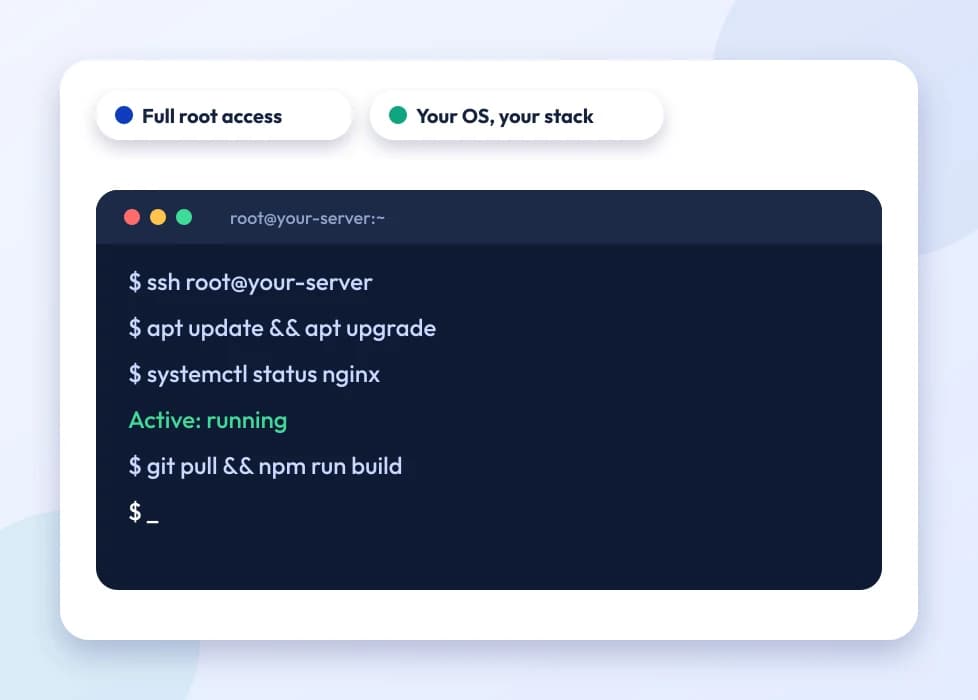
Server terminal representing Windows application hosting

Business Hosting — more headroom before you need a VPS

For a site that's outgrown a basic shared plan but isn't ready for the responsibility of a VPS, Business Hosting adds meaningfully more CPU, RAM and I/O, plus a free domain and priority support, while staying fully managed.
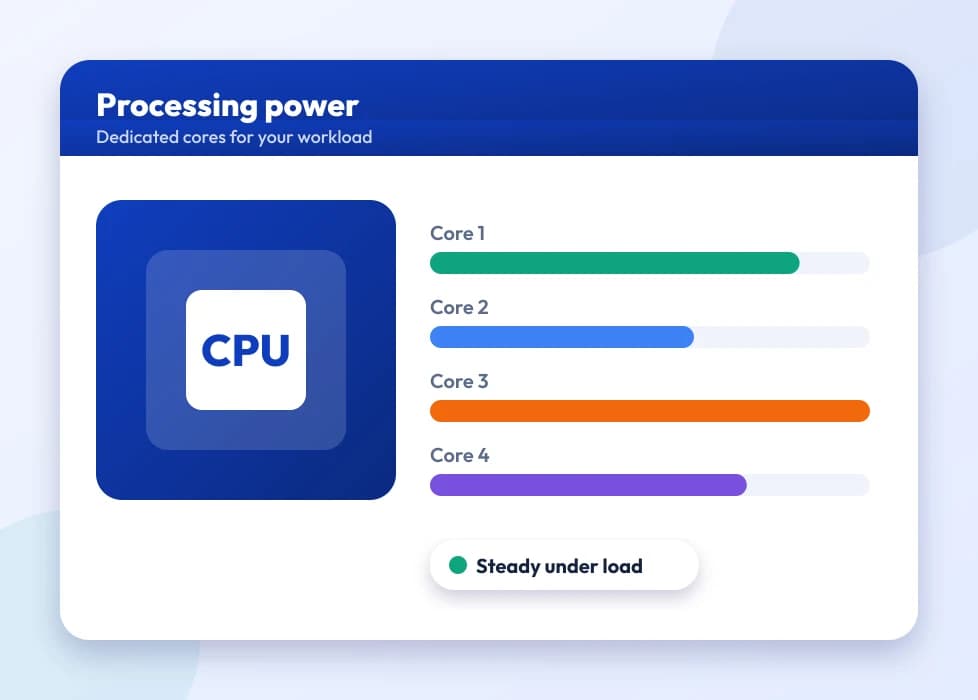
Server resource dial showing extra CPU and RAM headroom
WordPress Hosting and Application Hosting sit alongside these four as more specialised versions of the same NVMe-plus-LiteSpeed base — see the FAQs below for exactly how each one differs from plain cPanel hosting.
Got Questions?

Web Hosting FAQs

cPanel vs Plesk, Linux vs Windows, and everything in between

It's the server space and software that keeps your website reachable at your domain, 24 hours a day. The plan you pick decides how fast your site loads, which control panel you manage it through, and how much room you have before performance starts to suffer under real traffic.
Both are full-featured control panels for managing a site, email, databases and SSL — the difference is mostly which one you or your developer already know, plus platform support. cPanel is Linux-only; Plesk runs on both Linux and Windows, which is why it's the panel behind our Windows Hosting plan.
For most small businesses just getting online, cPanel NVMe Shared Hosting is the more sensible starting point — it's cheaper and gives you everything a typical brochure site or small store needs. Business Hosting makes sense once you're already busy: more visitors, more email accounts, or a checkout that can't afford to slow down during a sale.
It depends entirely on what's under the advertised price, not the price itself. A cheap plan running on old spinning disks with an oversold server will struggle the moment real traffic shows up. Every plan on this page — including the entry-level one — runs on the same NVMe storage and LiteSpeed stack as the premium tiers, so "cheap" here doesn't mean a different, slower product.
If your site or application is built in PHP (WordPress, most CMS platforms, most agency-built sites), you want Linux hosting — cPanel or Plesk Linux. If it's built in ASP.NET or needs an MSSQL database, you need Plesk Windows Hosting specifically; PHP also runs fine there if your project is mixed.
NVMe storage reads and writes data significantly faster than SATA SSDs, which matters most for database-heavy sites — WordPress, WooCommerce, anything with a lot of dynamic content. It's not a marketing label here; every plan on this page, from the entry cPanel tier upward, runs on it.
LiteSpeed is the web server software handling requests to your site, used in place of the more common Apache or Nginx. Its built-in caching (LSCache) noticeably speeds up dynamic sites like WordPress and WooCommerce without needing a separate caching plugin doing the same job less efficiently.
Yes, though both work. WordPress Hosting adds WordPress Toolkit for one-click staging, cloning and updates, plus LiteSpeed Cache tuned specifically for WordPress out of the box. Regular cPanel hosting runs WordPress fine too — it just leaves that extra tooling for you to set up yourself.
Application Hosting is built around the Softaculous installer with access to 377 web applications — CMS platforms, online stores, forums, CRMs and more — installable in one click on the same cPanel NVMe base as our standard shared hosting. It's aimed at anyone running something other than a plain WordPress site.
That depends on which plan and tier you choose — entry-level plans are typically built around a single primary site, while higher tiers support multiple domains under one account. The live pricing and specs on each product page show the exact limit per plan.
Yes, every plan listed on this page includes a free SSL certificate installed automatically, so HTTPS is live from day one without a separate purchase or support ticket.
Check the specific plan's pricing before you buy — some Hostripples reseller and hosting products explicitly renew at the same flat price you signed up at, which is worth confirming if a low first-year price is the main reason you're choosing a plan.
Shared and business hosting plans, including cPanel, Plesk and Application Hosting, come with a 30-day money-back guarantee for first-time customers. See our Refund Policy for the exact terms.
Yes — moving up as your site grows is a normal, supported path rather than something you need to plan for perfectly on day one. Most customers start on a lighter plan and upgrade once traffic or resource usage actually justifies it.
Yes, our team handles migration from your existing host at no extra cost on eligible plans, moving your files, databases and email so you're not doing it manually while trying to keep the site live.
Most shared and WordPress hosting plans are available from our Mumbai data centre for the lowest latency to Indian visitors, with several plans also offered from France, Poland, Canada and Singapore if a meaningful part of your audience is elsewhere.
Yes — cPanel and Plesk both include full email account management (inboxes, forwarders, spam filtering) as part of the control panel, at no extra cost beyond the hosting plan itself.
Daily automated backups run via JetBackup on our hosting plans, giving you a recent restore point without needing to configure or remember to run backups yourself.
Yes, for most small to mid-sized stores. WooCommerce and similar platforms run well on our NVMe and LiteSpeed setup; once order volume and traffic grow past what shared hosting comfortably handles, Business Hosting or a VPS is the next logical step, not a requirement from day one.
Same Plesk panel, different underlying operating system and app support. Plesk Linux Hosting runs PHP, MySQL and typical open-source stacks; Plesk Windows Hosting adds ASP.NET and MSSQL support specifically, for sites and applications built for the Windows/.NET world.
Yes — ASP.NET requires a Windows hosting environment. Our Plesk Windows Hosting plan supports ASP.NET and MSSQL alongside standard PHP, so a mixed codebase isn't a problem, but a pure PHP/Linux plan can't run ASP.NET at all.
Our cPanel NVMe hosting is available from a Mumbai data centre for the lowest latency to Indian visitors, alongside optional locations abroad (France, Poland, Canada, Singapore) if that better suits where your actual audience is.
377 applications are available through Softaculous on Application Hosting — CMS platforms, blogging tools, online stores, forums, CRMs, educational platforms and more, all installable in a single click without manually uploading files or configuring a database by hand.
Start with what your site is built in (PHP versus ASP.NET decides Linux versus Windows), then how much traffic you actually expect (shared versus Business Hosting). If you're still unsure, our support team can walk through it directly rather than you guessing from spec sheets alone.
Yes — Business Hosting includes a free domain as part of the plan, alongside the extra CPU, RAM and I/O headroom over standard shared hosting.
It depends on the specific tier — entry plans are typically sized for one primary WordPress install, while higher tiers support multiple sites. WordPress Toolkit makes managing more than one installation noticeably easier once you're past a single site.
24×7 support in English, Hindi and Marathi across chat and ticketing, covering everything from a panel question to an actual server issue — not just pre-sales queries.
The underlying stack — NVMe storage, LiteSpeed — is the same across every plan here, so raw serving speed for a lightly loaded site is comparable. The difference shows up under load: more CPU, RAM and I/O on the higher tiers means performance holds up better as traffic, database size or app complexity grows.
The free SSL included with hosting covers the individual domain it's issued for; if you need one certificate across several domains or subdomains, a Wildcard or Multi-Domain certificate from our SSL Certificates catalogue is the right fit, and it installs on any of these hosting plans.
Shared hosting (including Business Hosting) means we manage the server and you share underlying resources with other accounts, sized generously enough not to matter for most sites. A VPS gives you dedicated resources and root access, but also server administration responsibility — worth it once your needs are specific enough to justify it, not before.
Plesk Windows Hosting supports both side by side, since Plesk itself doesn't restrict you to one language — useful if you manage a mixed set of client sites without wanting two separate hosting accounts for it.
The usual signals are consistent slow-loading pages during normal (not just peak) traffic, hitting resource limits regularly rather than occasionally, or needing server-level configuration shared hosting doesn't expose. Business Hosting is the middle step worth trying first; a VPS is the next one after that.
Yes — you can register a new domain or transfer an existing one at checkout alongside any hosting plan, and Business Hosting specifically includes a free domain in its first term. Managing the domain and the hosting from one account also makes DNS and email setup simpler than juggling two separate providers.
Yes — both cPanel and Plesk let you switch the PHP version per site directly from the panel, which matters if you're running an older application that needs a specific version alongside a newer one that needs a different one, on the same account.
FTP access is available on every plan for uploading and managing files directly. SSH access depends on the specific plan and panel — it's more commonly available on higher tiers and Business Hosting; check the individual plan's feature list, or ask support if you need it for a specific workflow.
Our infrastructure is built for consistent uptime with monitoring across all hosting nodes, and the NVMe-plus-LiteSpeed setup on every plan is the same regardless of tier — the entry-level plan isn't running on lesser or less-monitored hardware than Business Hosting.
Yes — both panels include a cron job scheduler for running scripts on a timer (clearing caches, sending scheduled emails, running maintenance tasks), configurable directly from the panel without needing server access.
WordPress Hosting includes one-click staging through WordPress Toolkit, letting you test plugin updates or design changes on a copy before pushing to the live site. Plesk-based plans also offer this through WordPress Toolkit where it's installed; plain cPanel hosting typically means setting up a staging subdomain manually instead.
Yes — HTTP/2 is enabled by default across our hosting infrastructure, which works alongside LiteSpeed to reduce page load times, particularly for sites loading multiple assets like images, scripts and stylesheets.
Billing cycle options vary by plan — some are priced most competitively on longer (annual or triennial) terms, which is common across the industry, but shorter cycles are typically available too. Check the specific pricing table on each product page for the cycles offered.
Yes — selecting the Mumbai data centre for a plan keeps your site's data hosted within India, which matters for some businesses with data-residency preferences or compliance requirements specific to Indian customers.
That's exactly the point at which a VPS or dedicated server becomes worth the added management responsibility — Business Hosting is deliberately positioned as the last fully-managed shared step before that jump, not a ceiling you're meant to be stuck under.
Yes — server-level malware scanning and firewall protection run across our hosting infrastructure by default, alongside account isolation that keeps one compromised account on a shared server from easily affecting others. SSL, which is also included free, handles the encryption side, but that's a separate layer from malware protection.
Both are usually possible — the JetBackup interface in cPanel and Plesk typically lets you browse and restore recent backups yourself for common cases, and our support team can step in directly for anything more involved or time-sensitive.
Like most hosting environments, plans do have a file-count (inode) allowance tied to your resource tier, which matters mainly for sites with huge numbers of small files — a large email archive or an application caching aggressively. It's rarely a concern for a typical business site, but worth checking if your project is file-heavy.
Moving between panels isn't a simple toggle — it's effectively a migration, since the two store configuration differently. Our team can help migrate a site's files, databases and email from a cPanel account to a Plesk one (or vice versa) if your needs change, rather than you rebuilding it by hand.

Still not sure which plan fits?

Our support team is live 24/7 in English, Hindi & Marathi.

Chat with an Expert